Wednesday, May 7, 2014
Water Wednesday | #4 Water Politics
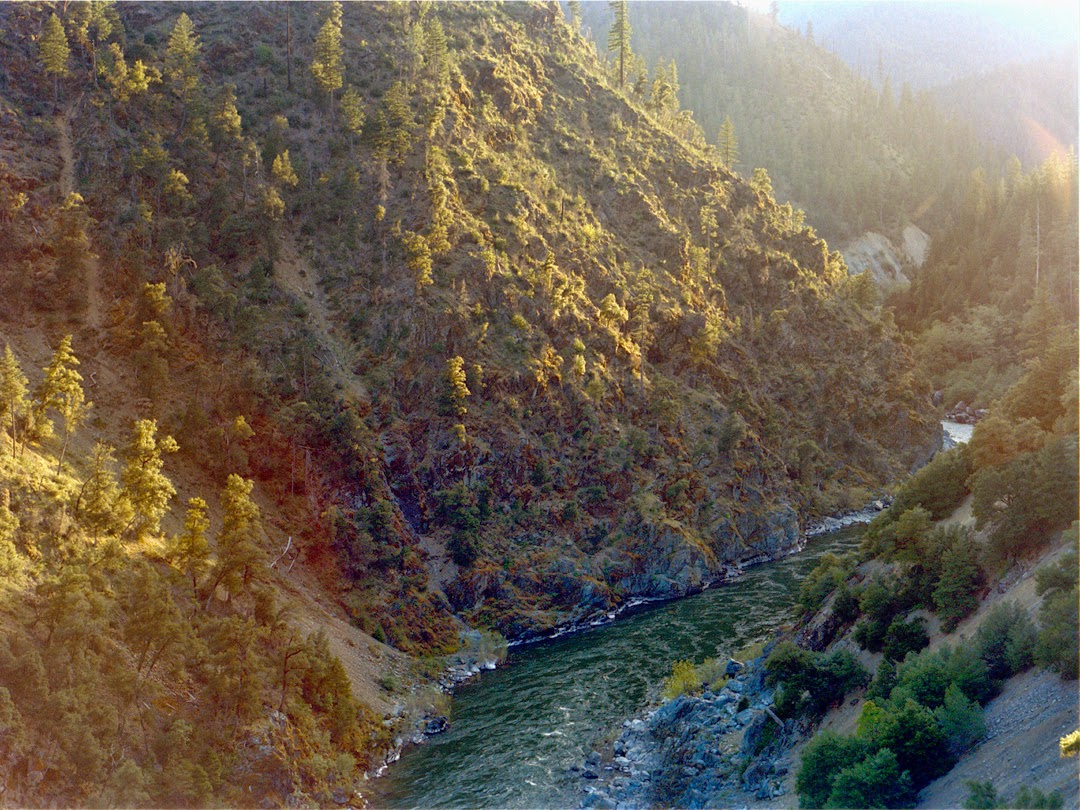
Politics being largely a game of opportunism, it is not surprising that drought leads to increased spending on water infrastructure, despite the expensive and over-wrought storage and delivery systems that are currently in place. In wet years, political forces respond to demands from agricultural and environmental pressure for guaranteed increases in water deliveries.
All of this short-sightedness ignores the need for long-term planning, and obfuscates the implementation of technology and policy to increase efficiency and smart conservation. The current proposal to drill tunnels underneath the San Francisco Bay Delta is a perfect example of this. Although the plan would potentially solve some issues involving water delivery south of the Delta, it is impossible to know the full environmental impact. Worst of all, the tunnel plan does nothing to address the fundamental problem: increasing demands on a decreasing resource. Let's here some politicians address a 20 year plan that solves the real problem.
Wednesday, April 30, 2014
Water Wednesday | #3 Wars of Ideals
| A mural of Oroville damn and it's spillway, Oroville, CA. March, 2009 |
| A mural promoting a dam-free Klamath River. Orleans, CA. April, 2013. |
Whether we like it or not our world has been remade. Environmental scientists working in the Central Valley will admit it is impossible to truly know how the area looked before Native Americans began to reshape it. Early accounts depict a seasonally flooded, unstable hydrology supporting massive numbers of birds and mammals. Given modern economic models, transportation infrastructure and settlement patterns it is easy to see how this environment was unsuitable to settlers. In fact, it was absolute contrary to the faith-based fervor that compelled vast numbers of people to trudge across a blazing desert to claim land and bend it to their will. Forcing a European notion of settlement onto a landscape designed for seasonal migration had consequences we are still copping with. Aquifers can't recharge, the acreage available for migrating waterfowl is reduced and spawning grounds for salmon and steel head are destroyed.
The war over the ideals that live in our heads plays out in media and propaganda. Those supporting increased water infrastructure and storage, and those advocating the destruction of dams and freeing of rivers both see a spiritual element in their positions. Where does the ideal meet the reality? How can we maintain our economy and save the small amount of wildness that is left in California? Talking to each other rather than past each other would be a good start. By acknowledging where we are, where we came from and how we got here, we may be able to begin moving forward.
Wednesday, April 23, 2014
Water Wednesdays | #2 The Fish Economy
However, water forms the basis of many industries, and the fishing families of Northern California have been experiencing a steady decline for decades. The link between damn building and decline of fish stocks has been well established. The fishing industry continues to suffer, but makes less noise than central valley agriculture.
A water development policy that balances the needs of agriculture and the needs of professional fisherman, anglers and the environment is a long way off. The primary question, 'is there enough water?', is frequently obscured by political interests taking advantage of a crisis partially of there own making. If we can examine and properly answer that question, we can move on to issues of conservation and efficiency which are the only possible solutions. We cannot shortchange the environment to save agriculture, or give up on a domestic fishing industry to prop up a domestic veggie industry. Such solutions are not only morally bankrupt, but also create a fundamental imbalance in a natural system that could have unpredictable consequences years or decades into the future.
Labels:
California,
drought,
fisherman,
fishing,
northern california,
San Francisco,
water
Wednesday, April 16, 2014
Introducing Water Wednesdays | #1 Wasting Water
Most Californians are acutely aware of the current drought in the State. For many - such as farmers, agricultural laborers, environmentalists and rural residents - it is a daily concern. For urban and suburban users, the severity of this years drought may have crept into their insulated lives. Water rationing, restrictions on water-intensive landscaping and pictures of dry reservoirs reveal the seriousness of the situation.
Last time the water outlook was anywhere near this bad it collided with my life, and the repercussions are still playing out. The severe drought of 2009 caught my attention just as I was finishing J-school in San Francisco. I missed graduation while photographing farm worker protests in Fresno County. Since then I've followed the issue and made photographic trips whenever possible.
Context is often lacking in the public discussion about California's water future. I recently read these words by Chuck Bonham, director of the California Department of Fish and Wildlife....
"..take a deep breath, put down the arguments we all had in the past and come together as Californians."
"This is not about picking between delta smelt and long fin smelt and chinook salmon, and it's not about picking between fish and farms or people and the environment."
-Quoted in "California Water...", KPBS, Feb 15 2014
No reason to mention what is actually needed, which is collaborative, innovative solutions with as little political influence as possible. Unfortunately, all sides seem to picking up their arguments and using them rather then putting them down.
I hope by featuring an image and a brief story from my archive every Wednesday, I can add a little context to the water talk. And I hope you find it interesting.
#1 Wasting Water
Overflow spilloff is not the problem currently on people's minds. However, you will definitely hear arguments about how much water is being 'wasted' (i.e., being allowed to return to the environment and the ocean). This is why we need more storage - so we can save more for the lean times, like now. I take issue with this reasoning for a couple of reasons.
The primary problem is that not many good potential dam sites remain. From the 1950's to the 1970's (and 80's) America went on a dam-building spree, and California was a hot spot. Do we want to stretch the limits of engineering in this case?
In addition, dams drastically alter the landscape, displace people and wreak unpredictable havoc on the environment. Water stored in a dam sits out in the blazing sun, evaporating, all summer. It develops molds and scums. The amount of time and energy that currently goes into mitigating these effects should be enough to convince us to avoid dams.
Nature has a storage system. Humans sometimes call it underground storage, or aquifers. Allowing more land in the central valley and neighboring watersheds to flood in the wet months might be a good way to store water for the future, without nasty dams. Finding that land would not be easy.
Thanks for reading.
Nathan
Last time the water outlook was anywhere near this bad it collided with my life, and the repercussions are still playing out. The severe drought of 2009 caught my attention just as I was finishing J-school in San Francisco. I missed graduation while photographing farm worker protests in Fresno County. Since then I've followed the issue and made photographic trips whenever possible.
Context is often lacking in the public discussion about California's water future. I recently read these words by Chuck Bonham, director of the California Department of Fish and Wildlife....
"..take a deep breath, put down the arguments we all had in the past and come together as Californians."
"This is not about picking between delta smelt and long fin smelt and chinook salmon, and it's not about picking between fish and farms or people and the environment."
-Quoted in "California Water...", KPBS, Feb 15 2014
No reason to mention what is actually needed, which is collaborative, innovative solutions with as little political influence as possible. Unfortunately, all sides seem to picking up their arguments and using them rather then putting them down.
I hope by featuring an image and a brief story from my archive every Wednesday, I can add a little context to the water talk. And I hope you find it interesting.
#1 Wasting Water
| Englebright Dam, along the Yuba River, spills 8200 cubic feet per second over it's lip during early heavy storms in Northern California. December 2010. |
The primary problem is that not many good potential dam sites remain. From the 1950's to the 1970's (and 80's) America went on a dam-building spree, and California was a hot spot. Do we want to stretch the limits of engineering in this case?
In addition, dams drastically alter the landscape, displace people and wreak unpredictable havoc on the environment. Water stored in a dam sits out in the blazing sun, evaporating, all summer. It develops molds and scums. The amount of time and energy that currently goes into mitigating these effects should be enough to convince us to avoid dams.
Nature has a storage system. Humans sometimes call it underground storage, or aquifers. Allowing more land in the central valley and neighboring watersheds to flood in the wet months might be a good way to store water for the future, without nasty dams. Finding that land would not be easy.
Thanks for reading.
Nathan
Labels:
California,
climate,
climate change,
dams,
drought,
storage,
water
Saturday, April 12, 2014
Diabetes type 1 for the New York Times

A few weeks ago I did a gig for the New York Times, which ran last Sunday April 6th. It is a sprawling piece about the increasing cost of health care technology and medicine for the chronically ill. For my part I was lucky enough to photograph a wonderful family in Oakland, who have a daughter with Diabetes Type 1. You can read the excellent story by reporter Elisabeth Rosenthal here.
Below is the full-frame version of the shot that ran, and an outtake. Thanks to Gabrielle, her family and Beth at the Times.
![]() |
| The insulin pumps Gabrielle Woodland and others use for Type 1 diabetes are efficient, but expensive.CreditNathan Weyland for The New York Times |
![]() |
| Gabrielle tests her blood sugar level with a glucose reader. Photo by Nathan Weyland |
Labels:
Diabetes,
Diabetes type 1,
Health care,
New York Times,
Oakland,
photography
Wednesday, March 26, 2014
Update, resurection
Sorry for the extended absence. I'm back in the Bay Area, now in Oakland and loving it. To catch up visually, check out www.weylandphoto.com.
Rather than mourn over lost time, lets just get down to business. Here are just a couple images from my time away from the blog. We're back, baby.
Tuesday, April 19, 2011
Memories of Yuba / Recuerdos de Yuba
Apologies for the prolonged absence, but a lot has happened since the last post. I've moved out of the Yuba/Sutter counties and returned to the Bay Area, this time Oakland. Although I love it here and am happy to be back, I do miss the unique culture and open space of the north valley. Here are a few portraits from my last couple months.
New work, from the new hood, coming....
Discúlpame por la ausencia prolongada, pero ocurió mucho hasta el proximo post. Mové afuera de las condidads de Yuba-Suter y volví a la area valle, este vez Oakland. Aunque me encanta aquí y me hace feliz volver, echo de menos la cultura unica y plano campo del valle central norte. Aqui estan unos retratos de mis meses finales.
Trabajo nuevo, del bario nuevo, viene....


New work, from the new hood, coming....
Discúlpame por la ausencia prolongada, pero ocurió mucho hasta el proximo post. Mové afuera de las condidads de Yuba-Suter y volví a la area valle, este vez Oakland. Aunque me encanta aquí y me hace feliz volver, echo de menos la cultura unica y plano campo del valle central norte. Aqui estan unos retratos de mis meses finales.
Trabajo nuevo, del bario nuevo, viene....


Subscribe to:
Posts (Atom)